


Honzík Became Head of Procurement—Now What? (5)
I like this case study. I ask my students to describe how they would take over and run a company’s purchasing process. The answers are sometimes bland, sometimes…


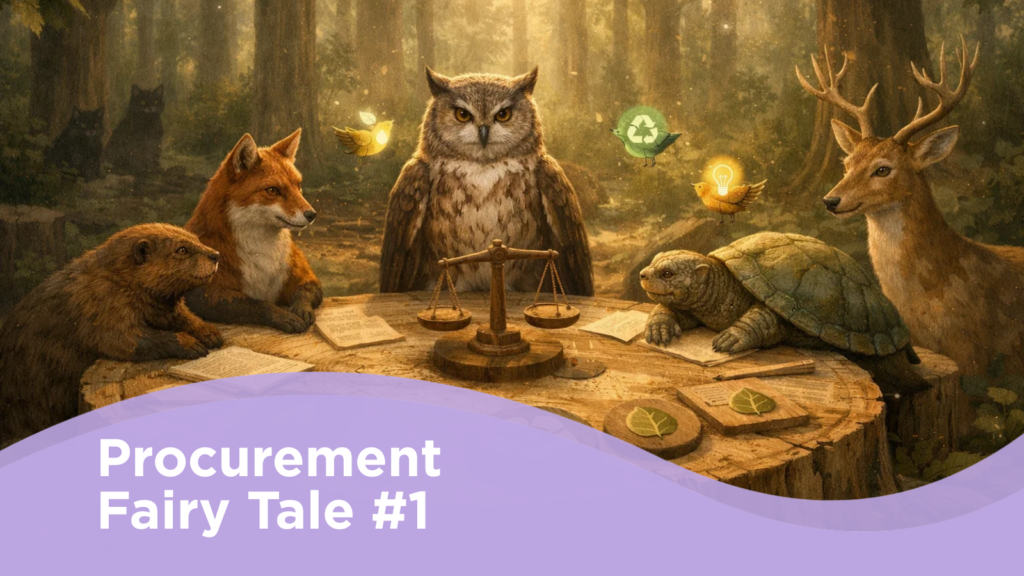
A fairy tale in which the little animals learn how important it is to keep track of their suppliers and how carefully they should work only with the chosen ones. From now on, they’ll put the suppliers they do business with on an approved supplier list.
Our hoarder instincts push us to “secure” everything in complicated ways—stock and suppliers alike. One isn’t enough; you need at least four, and in the warehouse you must have an iron and a silver reserve, just in case. That’s what various disasters taught us, and the Sword of Damocles—production stoppage—hangs over us constantly. It looks great, but it has a few downsides:
Knod’s law: as few as possible of the best possible suppliers
Easy to say—but how do we achieve it? Gradually, dear children, gradually. First we convince our internal customers, our procurement team, and of course the bosses. Then we do that mythical ABC analysis and find out how many suppliers we actually have: which fall into category A (typically five percent), B (typically thirty percent of suppliers) and C (typically sixty percent of suppliers). We counted 1,000, and Honzík had a myocardial infarction. It meant that whoever got in the car would buy something and bring it back. For a single product there were at least three suppliers (and their deliveries weren’t mutually compatible), and the CFO had no idea who he was paying for what, while everyone kept calling and chasing him for payments.
If a Christmas card cost ten crowns and the stamp twenty, then just sending holiday greetings—Merry Christmas or Happy New Year—to your suppliers would cost you thirty thousand. Hard not to buy into that, right?
Once Honzík came around after his heart attack, he made a plan to cut the number of suppliers down to 200. The crowd began complaining in chorus: IT CAN’T BE DONE!, we’ve never done it like that, take that madman back, my supplier is special and completely unique! And ir-re-place-a-ble. IT CAN’T BE DONE!
Honzík expected this resistance. But he knew that a supplier’s willingness to invest in the relationship (innovation, supplier credit, flexibility, sustainability) is tied to the slice of money they get in the pie. So let’s do the math: if we have a one‑billion CZK procurement budget, with 1,000 suppliers it averages one million CZK per supplier; with 200 suppliers it averages five million CZK.
So he started tendering among category A suppliers and B suppliers, and little by little he filled the approved supplier list only with those who made it through the tender sieve. Usually, this approach delivers five percent savings on purchased items—but that’s a side effect, because the real goal is to bring order to how we work with suppliers. As the classic (Jan Hirsch) says, procurement isn’t only about savings. And careful: don’t bother with category C suppliers—there are other spells for that.
KNOD, Edward. M., SCHONBERGER, Richard.J.2001. OPERATIONS MANAGEMENT. Meeting Customers´Demand. Boston: MCGraw-Hill Irwin. ISBN 978-0072460506
Explanation of terms:
ABC analysis – a statistical tool where we track individual suppliers or items by financial volume, so we can distinguish the important ones from the less essential. The author is probably Vilfredo Pareto (80/20).
Side effect – a secondary, side, accompanying effect, sometimes unexpected or adverse.
I like this case study. I ask my students to describe how they would take over and run a company’s purchasing process. The answers are sometimes bland, sometimes…

There comes a point when managing fasteners weighs on you so much that you feel like all you do in meetings is deflect colleagues’ shots — “we would…
Motto: “Procurement isn’t only about savings.” — Jan Hirsch Honzík rushed to his boss with his latest triumph. He’d managed to squeeze a 20% discount out of the…

Privacy Policy here.

