



Honzík Became Head of Procurement—Now What? (5)
I like this case study. I ask my students to describe how they would take over and run a company’s purchasing process. The answers are sometimes bland, sometimes…


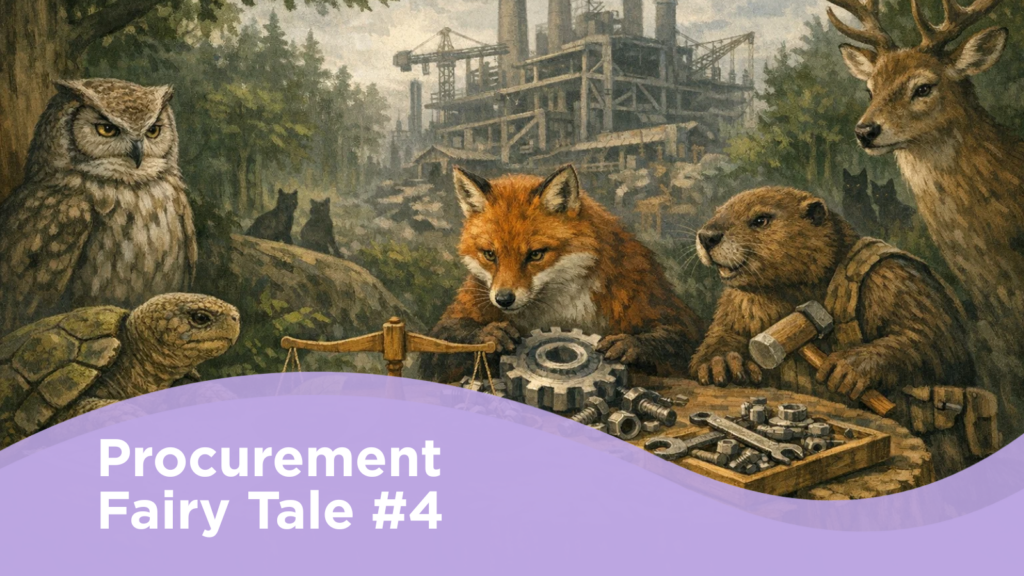
There comes a point when managing fasteners weighs on you so much that you feel like all you do in meetings is deflect colleagues’ shots — “we would certainly hit the plan (and get our bonuses) if it weren’t for the mess in purchasing fasteners. When we’ve got type-x screws from supplier A, we’re missing screws from another supplier. It’s great to assemble the whole project, but it’s not great to have no screws.”
We so neatly calculated consumption from the drawings, so neatly requested quotes and competitively bid each item and supplier, exactly to the requirements and exactly to the plan. Our best people are working on it — and it still doesn’t work. I don’t know what’s wrong; maybe the colleagues are just making things up to cover their own problems.
We hired students to recount every incoming delivery of fasteners — carefully by type and quantity — and enter it into the system. It was ant work, like picking redcurrants, but everyone wanted it exact. At least we then had, in the system, an overview of what we didn’t have (and production kept asking us for that overview) — but the suppliers wanted to invoice even what they hadn’t delivered.
You can hardly wait for the day the director calls you in to talk about screws and why — dammit — the factory is at a standstill over such a triviality.
Only, we do have savings — demonstrable ones. We recalculated everything and can prove it. And on top of that there was one special item we had to bring in all the way from Sweden.
So now, let’s calm down, take a deep breath, and look at how we could solve the situation before the director decides to appoint someone “more capable” to head procurement.
First of all, let’s go see how the neighbors handle fasteners — no need to reinvent the wheel. We’ll find it’s a standard task and there’s no need to suffer over screws at every meeting.
Then, without hysteria, we’ll present a project at the management meeting — this is how we’ll handle fasteners (benefits and risks, timelines, milestones, and tasks). Of course the project will have its opponents — why this and why that, and “after the war we did it differently and everything worked, unlike today.” That’s life.
And then, holy simplicity, we’ll run a tender for fasteners — presumably for all the types of fasteners we use, bidding out the full annual consumption and looking for a single supplier. Best of all by e-auction; that gives us one more important thing: the ideal supplier. The rest you know: we’ll talk to the winner warmly, human to human — but mainly we’ll require that they deliver, and deliver steadily. Let them feed the screws straight into little buckets on the line at the point of use and keep an eye on the lower limit (something like kanban). And that’s that.
As for how we’ll control it — simply. We know the consumption and we can do control weighings (provided there’s no stealing — and there shouldn’t be). It’s that simple. What have you got next?
PS: And don’t forget to praise ourselves at the meeting for how nicely we handled it — according to the principle: MARKET EACH IMPROVEMENT!
I like this case study. I ask my students to describe how they would take over and run a company’s purchasing process. The answers are sometimes bland, sometimes…
Motto: “Procurement isn’t only about savings.” — Jan Hirsch Honzík rushed to his boss with his latest triumph. He’d managed to squeeze a 20% discount out of the…

That lady who snapped at the camera—“I would ban all those internets”— became quite a meme, an icon even. An icon of what, exactly? For those who remember…

Privacy Policy here.

